New expert article in Straßenverkehrstechnik: Making public transport reliable and climate-friendly with AI
In the current issue of Straßenverkehrstechnik (01/26), Dr Christine Langhanns (rms GmbH) shows, as part of the AIAMO AI series, how data- and AI-supported approaches can help to strengthen public transport as a central pillar of environmentally sensitive mobility management.
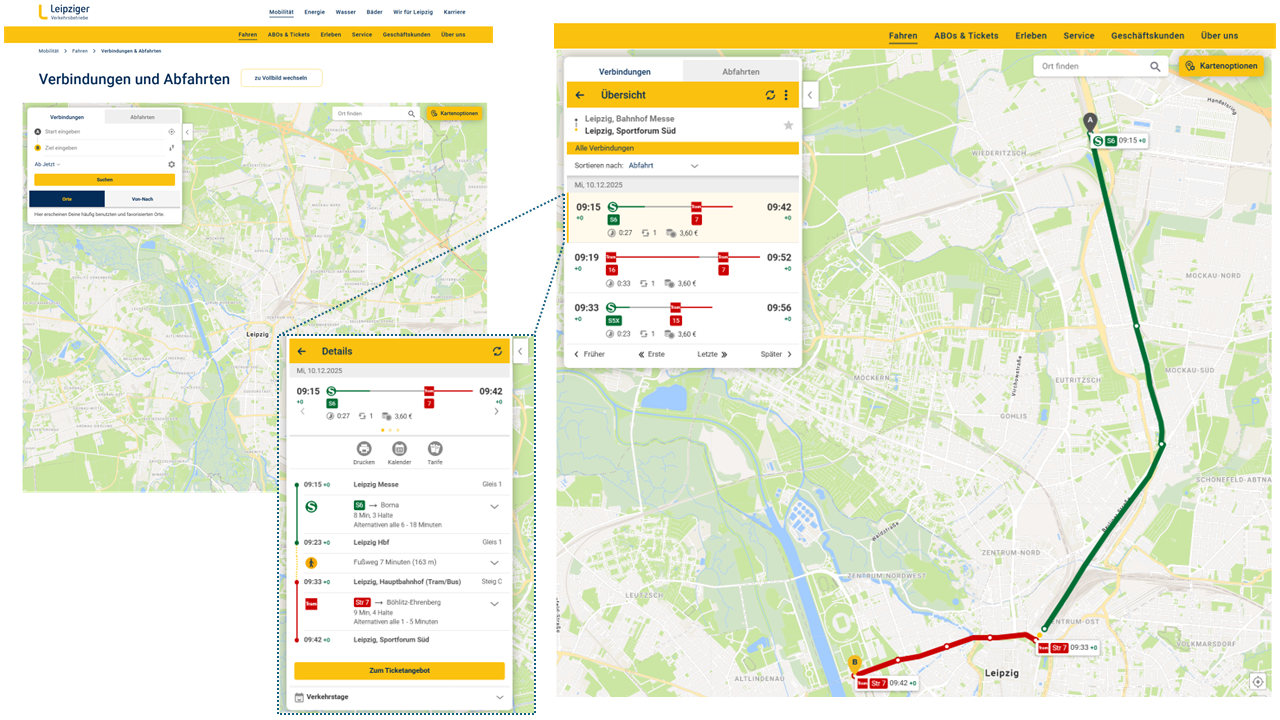
Use of timetable and real-time forecast data from Leipziger Verkehrsbetriebe (LVB).
Use of timetable and real-time forecast data from Leipziger Verkehrsbetriebe (LVB).
Thanks to its high transport capacity, public transport offers great potential for reducing emissions, but so far it has mainly been used intensively in urban areas. Frequent barriers to use include insufficient accessibility of stops, low frequency of service and a lack of reliability due to delays and cancellations. Traffic management measures should therefore specifically prioritise public transport in order to increase its attractiveness compared to private transport.
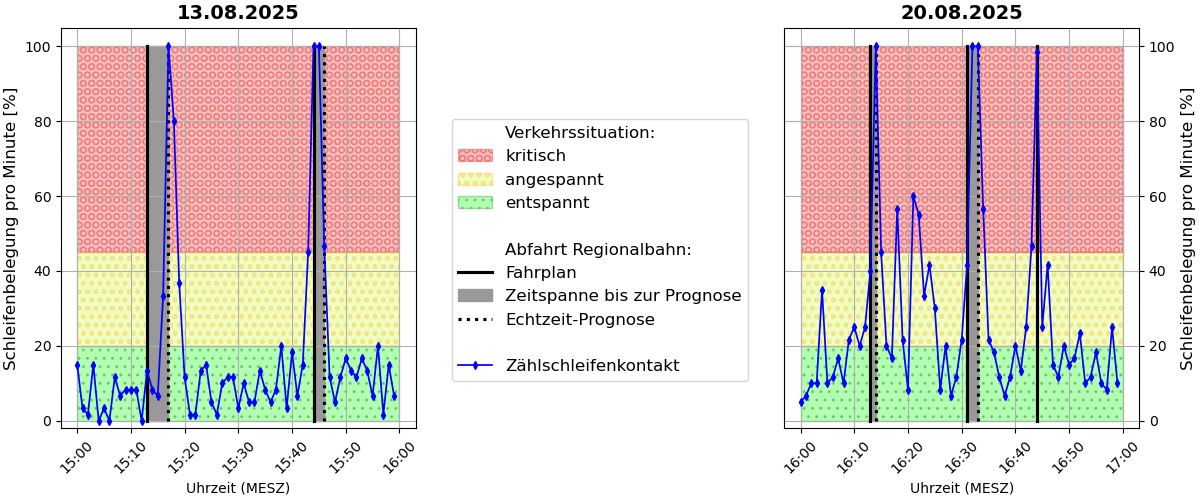
Traffic situation in front of the railway crossing on Schlossstraße heading out of town in Landau in the Palatinate.
Traffic situation in front of the railway crossing on Schlossstraße heading out of town in Landau in the Palatinate.
Increasing digitalisation now enables comprehensive use of timetable and real-time data. Uniform data standards – coordinated by the DELFI initiative, among others – form the basis for seamless nationwide travel planning and a sound assessment of accessibility and service quality.
In the AIAMO project, this public transport data is linked via the AIAMOnexus to other data sources such as traffic information, sensor data and weather data. AI methods are used to simulate traffic flows in digital twins, evaluate measures and identify disruptions or bottlenecks at an early stage. The article shows how high-quality data and AI-supported measures can make public transport more reliable, efficient and climate-friendly.
17.09.2025 - New technical article: Project progress in Landau [more...]
28.08.2025 - AIAMO in the new edition of BAUM Insights magazine [more...]
27.08.2025 - AIAMO in the magazine Markt & Technik: Intelligent mobility management with AI [more...]
04.08.2025 - AIAMO in the magazine Zeitung für kommunale Wirtschaft (ZfK): AI makes you mobile - intelligent mobility management [more...]
18.07.2025 - AIAMO in dialogue: New mCAST podcast episode on intermodal mobility [more...]
15.07.2025 - AIAMO special edition: Specialist articles from the AI series in Straßenverkehrstechnik With a greeting from the Federal Minister of Transport, Patrick Schnieder [more...]
08.07.2025 - 4th AIAMOcamp - Two years of AIAMO and a strong signal for the mobility of the future [more...]
23.06.2025 - AIAMO featured in Leipziger Volkszeitung: "Leipzig collects data for the traffic planning of tomorrow" [more...]
18.06.2025 - Digital Twins in Action: Expert article shows new approaches to environmentally responsible traffic management [more...]
12.06.2025 - AIAMO presents the integration zone for the first time at Data Week Leipzig [more...]